The Locked Gate
Access, those who control access, and what we glimpse through the cracks

Not getting the newsletter every month? Just seeing it now and want to start getting them? Click the button below to sign up!
RECIPE/COMMUNITY GARDEN UPDATE
The community garden is being put to bed for the winter. Gardeners pulled together a sumptuous potluck dinner which a generous co-founder of the garden hosted in her beautiful, art-filled home. (Taiyo was enchanted with a delicate, hat-sized deer head on the wall made entirely of cut-apart coca-cola cans.) Being with my fellow gardeners always makes me think about access, and the ways that access is given and denied to folks to have or practice things that are of value to them. Technically, because we operate on city parkland, we must keep our membership open to all city residents. Functionally, though, it’s a neighborhood garden. No one from outside the neighborhood joins.
It is one reason I took on my job at Farm Alliance of Baltimore: I wanted to help make it possible for all communities in Baltimore to have access to the ability to grow their own food, as we do at the Eric T. Waller Memorial Community Garden(Farm). So now, for the first time ever, the Farm Alliance is throwing open its membership and welcoming individuals and gardens rather than just production farms. Bigger tent, more access.
I’ve always been reticent to take on any leadership roles in the garden; I know little about soil, pests, or crops, and the corps of master gardeners who maintain and interpret the sacred scrolls of garden knowledge seem to have it well in hand. Deeper knowledge of the garden isn’t off limits for me; it’s honestly a relief for me to be able to show up and pull weeds as a worker instead of having to lead others. But next season may be the season when I step into one of those roles. We’ll see.
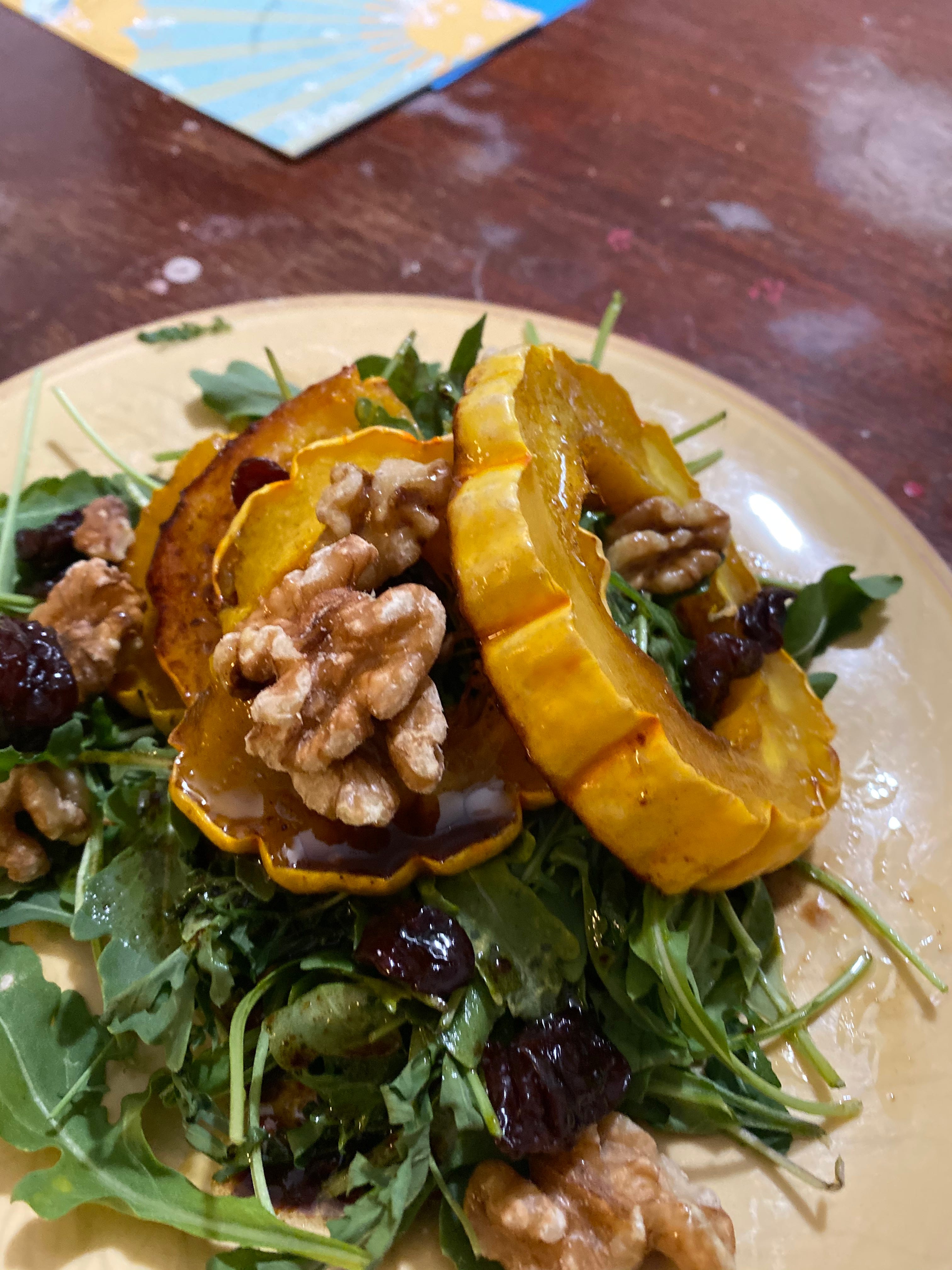
I brought a baked purple sweet potato, cream cheese and sage dish taught to me by my sister Kandra, who is a thoughtful and inspired cook. But I forgot to photograph it, so instead I offer this warming, simple autumn salad which I made for myself on a recent work-from-home day. I had a small delicata squash left over from a garden harvest of several weeks ago, and I haven’t been back to the garden since. I hope you can find a delicata or similar thin-skinned squash you can use to make this for yourself.
INGREDIENTS: Arugula or other bitter greens
One delicata squash, seeds and pulp removed and sliced into 1/4-1/2 inch rounds (leave skin on)
2-3 tbsp. Butter (or an oil-based butter to make it vegan)
2 tbsp. Brown sugar
Pinch of salt
Raw walnut halves (almonds or pepitas would work well too)
Dried cherries or cranberries
Balsamic vinegar
Extra Virgin Olive Oil (EVOO)
Preheat oven to 400 degrees F.
Place squash rounds on cookie sheet. Place a small pat of butter and a sprinkle of brown sugar in the center of each. (Does not have to be precise, you can get sugar on the squash.) Bake squash for 20-25 minutes. Let cool completely.
Make a bed of greens. Sprinkle dried fruit and nuts over it. Mix together EVOO and balsamic vinegar in a 3:1 ratio. Place slightly-warm squash on the salad, sprinkle with dressing and serve.
Ain’t that pretty?
ANOTHER PRETTY THING

John James Audubon’s bird paintings are all available in the public domain since 2015, for free. (Gate: unlocked.) His composition of the images is virtually unmatched. And how did he get this particular color? I love his paintings because they are marvelous and monstrous: the reason he could sketch still-life birds is because most of them were shot dead and stuffed. Yet an image such as this might elevate the bird to the status of a charismatic megafauna, a creature we humans are inspired to work to save. Which, of course, was Audubon’s hope. The smaller sacrifice justified the larger good. Flamingos are doing okay, because we’ve assigned it a personality and decorated our homes and gardens with plastic effigies of it.
Doesn’t help this particular bird, though. 😬☠️🤷🏻♀️
MY PUBLISHED WRITING
My activist parents and ancestors (including the racist ancestors, I remember you too, believe me, we all do) teach me that I must resist the normalization of fascism and white supremacy, however normal everyone else thinks it is. My resistance takes a number of forms, but primarily I tell stories.
Here is a story that went largely unnoticed in the last three years since the Baltimore Campaign for Liberty — a local chapter of a Ron Paul-inspired libertarian dark money political organization — succeeded in whipping some of my suburban homeowner neighbors into a racist panic. The group persuaded them to pressure their county councilmembers to vote down an anti-discrimination bill that would have protected Section 8 housing voucher holders trying to find a place to live. I wrote about this for The Public Eye, the wonderful magazine of the amazing watchdog group PRA, which researches the Right.
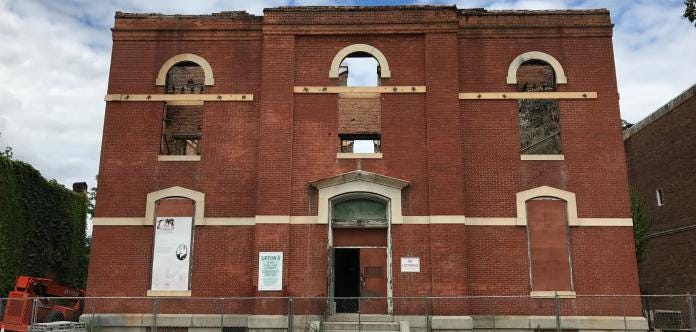
This past week brought a wonderful update to this story, which is that the Baltimore County Council has finally passed the anti-discrimination law. Landlords can no longer deny renters housing based on their source of income. We can see justice getting closer, inch by inch.
OTHER PEOPLE’S WRITING
Speaking of locked gates, the union I used to belong to, the Washington-Baltimore News Guild, has published an enraging and thought-provoking deep dive into the pay structures at the Washington Post. WaPo owner and Amazon CEO Jeff Bezos, of course, has the power to click his heels together three times and do away with all the racial and gender-based discrimination that is clearly going on there. But he hasn’t. It’s actually appalling: check out this bar graph that shows how much salaried white men make compared with salaried Black women in the newsroom.
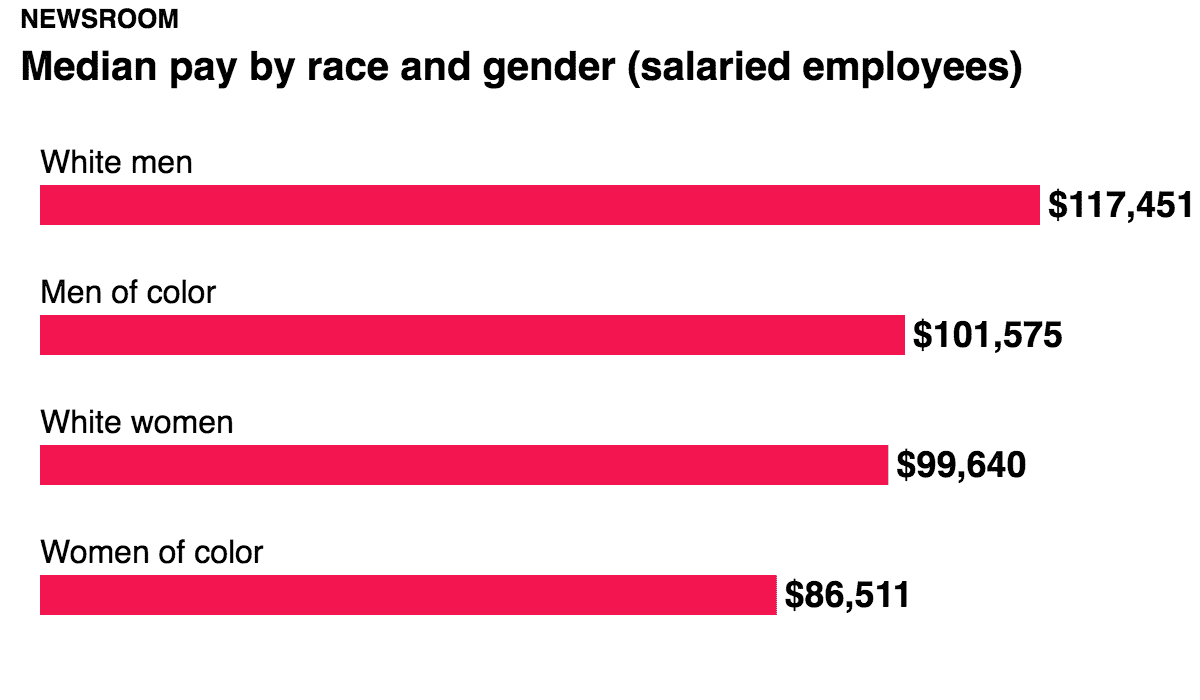
Source: A STUDY OF PAY AT THE WASHINGTON POST. By members of the Washington Post Newspaper Guild https://postguild.org/2019-pay-study/
Oh, what about the merit raises, you say? Surely folks are recognized for their work and offered raises even if their starting pay isn’t great compared with white men? Uh, no.
The percentages of merit raises distributed by race and ethnicity for salaried journalists are as follows:
White: 75.7 percent
Black: 9.3 percent
Asian: 8.3 percent
Hispanic or Latino: 3.6 percent
All others: 3.1 percent
The Post contends that merit raises are tied mostly to performance evaluations, and the data bears that out. Those who score higher, regardless of race, ethnicity or gender, tend to be the ones who get merit raises most frequently. However, an analysis of every performance evaluation score over the past four years shows that those who score the highest are overwhelmingly white. In cases in which a 4 or higher was awarded to a salaried newsroom employee, 85 percent were white, and over half of scores of 4 or higher were awarded to white men. And in cases in which salaried newsroom employees were given a score of 3 or below, 37 percent of those scores were given to employees of color (the newsroom is about 24 percent nonwhite).
Gross.
Anyway, just head over to the Guild’s website and read the whole thing. It represents a phenomenal piece of data and investigative journalism, and it proves that the injustices that women and journalists of color have faced for ever in the media industry have only continued. I’m grateful to the Guild for looking through the cracks in the gate and documenting what they saw. Now I hope they also fight for it to change.
SHARING
Want to tell others about this newsletter and get them to read it? That’s great! You can either forward this to them, or use the button here:
Want to contribute to The Creative Aid Society? Show me your creative genius! Pitch me an idea. We use writings and images that center around a particular theme each month, but the general idea is to encourage and showcase how human creativity is remaking the world. You can send me your ideas by replying to this email or inboxing me at: mariyaDOTstraussATgmailDOTcom.